
Italian Baroque Music
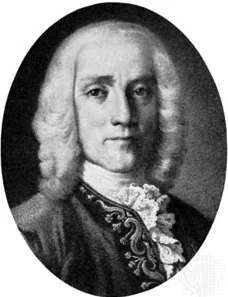
Domenico Scarlatti
Domenico Scarlatti (born October 26, 1685, Naples [Italy]—died July 23, 1757, Madrid, Spain) was an Italian composer noted particularly for his 555 keyboard sonatas, which substantially expanded the technical and musical possibilities of the harpsichord.
Domenico, the son of the famous composer of vocal music Alessandro Scarlatti, was born in the same year as J.S. Bach and G.F. Handel. At age 15 he secured an appointment as organist in Naples. In 1703 his first operas, L’Ottavia restituita al trono and Il Giustino, were produced there. In 1705 his father sent him away from Naples to Venice, reputedly to study with the composer Francesco Gasparini. While in Venice, Scarlatti may have met a young Irishman, Thomas Roseingrave, who many years later described Domenico’s harpsichord playing to the English musicologist Charles Burney as sounding as if “ten hundred devils had been at the instrument; he had never heard such passages of execution and effect before.” Scarlatti may have also formed a friendship with Handel while in Venice.
-
By the spring of 1709 Scarlatti had taken over his father’s position in Rome as musical director and composer to the exiled queen Maria Casimira of Poland. Until her departure in 1714, he composed a series of operas and occasional pieces, all of them on texts by the queen’s secretary, Carlo Sigismondo Capeci. Some of the music has survived, but, were it not for the reflected glory cast upon it by the later harpsichord sonatas, this music would inspire little interest today.
By 1713 Scarlatti had established relations with the Vatican, and from 1714 to 1719 he held the position of musical director of the Julian Chapel at St. Peter’s. Of the surviving church music that appears to date from this time, only the 10-voice Stabat Mater gives a hint of the genius that was to find its long-delayed flowering in the harpsichord sonatas.
During these years Scarlatti brought to an end his apparently never-too-successful career as an opera composer with Ambleto (1715); it had an intermezzo, La Dirindina, which, because of the liberties of its text, was withdrawn from performance in Rome. His endeavours also produced Berenice, regina di Egitto (1718), with music by both himself and Nicola Porpora. More promising for the future were his relations with the Portuguese embassy, for which in 1714 he composed a cantata in honour of the birth of a crown prince of Portugal.
In September 1719 Scarlatti abandoned his post at the Vatican, and by the end of 1720 he was in Lisbon, where his serenata Contesa delle Stagioni was performed at the royal palace on September 6. He had become musical director to King John V of Portugal, as well as music master to the king’s younger brother Don Antonio and to Princess Maria Bárbara de Bragança, who was to remain his patroness and for whom most of the harpsichord sonatas were later written. The production of serenades and church music continued, most of it adequate but hardly distinguished, if judged by surviving pieces. But a major change was taking place in Scarlatti’s life. In 1725 his father died; in 1728 he made his last visit to Italy to marry at the unusually late age of 43 a young Roman, Maria Caterina Gentili, who before her death in 1739 bore him six children (four more were born to his second marriage, with the Spanish Anastasia Maxarti Ximenes); and also in 1728 his pupil Maria Bárbara married the Spanish crown prince, the future Ferdinand VI, and Scarlatti followed the royal pair to Spain. -
here he was to spend his remaining years, first in Sevilla (Seville), perhaps already listening to Spanish popular music and imitating, as Burney tells us, “the melody of tunes sung by carriers, muleteers, and common people,” and after 1733 in the royal residences of Madrid and at the nearby palaces of La Granja, El Escorial, and Aranjuez. Many links with the past seem to have been cut, and an emancipation seems to have taken place that permitted the extraordinary stylistic development of the harpsichord sonatas. Scarlatti virtually disappears as a composer of vocal music, and there is no evidence of his participation in the extravagant opera productions directed at court by his friend the castrato singer Farinelli.
The fullest surviving record of Scarlatti’s life and character is to be found in the series of harpsichord sonatas that began with the publication of his Esercizi per gravicembalo (Exercises) in 1738, which contained 30 sonatas. The series of sonatas continued brilliantly with manuscript volumes copied out for Maria Bárbara in 1742 and 1749. She became queen of Spain in 1746, and the musical activities of the Spanish court became more lavish than ever. But the principal evidence of Scarlatti’s own activity continues to reside in the final great series of harpsichord sonatas copied out for the queen from 1752 to 1757, the year of Scarlatti’s death.
Except for 18th-century English publications of his earlier sonatas and a few Continental reprints, the bulk of Scarlatti’s keyboard music was almost unknown beyond his immediate circle and exercised little direct influence on his Italian successors or on German and Austrian composers such as C.P.E. Bach, Joseph Haydn, W.A. Mozart, and Ludwig van Beethoven, a number of whose stylistic features it anticipated.
It was not until the edition prepared by the Italian pianist Alessandro Longo that virtually all the harpsichord sonatas became available. Longo published, from 1906, an almost complete edition of arrangements for piano of 545 sonatas, grouping them according to key but splitting up Scarlatti’s sonata pairs and paying scant regard to chronology and style. The flaws in this and other editions hampered any serious understanding of the sonatas’ stylistic development and coherence. In his monograph Domenico Scarlatti (1953), Ralph Kirkpatrick provided a complete list of works and renumbered 555 sonatas in the chronological order of the printed and manuscript collections. Kirkpatrick’s numbering of the sonatas subsequently replaced that of Longo. With the respective complete editions of Kirkpatrick and of Kenneth Gilbert (1971–84), which maintain the chronological order and pairwise arrangement of sources, an unobstructed view of Scarlatti’s keyboard work can now be obtained, revealing one of the most strikingly original styles of the 18th century.
-
Of Scarlatti’s 555 sonatas, about 10 are for violin and continuo, 3 are specifically for organ, and the rest are for harpsichord. Scarlatti’s most mature period and largest output was concentrated in the years between 1753, when he was 67, and his death four years later. A consistent development is perceptible in his harpsichord music, essentially characterized by an expansion of simple binary dance form through elaborations of thematic organization and extensions of tonal range. Spectacular innovations in keyboard virtuosity—including hand crossing—are often accompanied by audacious dissonances, unconventional voice leading, and far-flung modulations. The predominance of fast movements in the earlier sonatas gives way to a greater frequency of slow movements in the middle period, to a wider range of lyricism, and in the later sonatas to a leaner, more concentrated style.
Although a few of the early sonatas, such as those for violin, consist of up to four movements, the bulk are single movements, normally in two sections. At least 388, however, were apparently composed as sonata pairs, either in the same key or related keys, and represent, in effect, 194 two-movement sonatas. These either contrast slow movements with fast ones, couple complementary fast movements, or extend the total tonal range of a pair conceived as a unit. There are also at least a dozen sonatas arranged in triptychs.
The instrument for which most of the late sonatas were composed appears to have been a one-manual harpsichord of the traditional Mediterranean kind, with an extended compass of five octaves and with two eight-foot registers. On a background of such simplicity and seeming limitation of resources, Scarlatti imposed a variety of sonorities and textures that elevate his writing for the harpsichord to a level comparable to that of Frédéric Chopin and Franz Liszt for the piano.
Shortly before his death, Scarlatti returned at least once more to vocal music, with a Salve Regina for soprano and strings, perhaps the most beautiful of his vocal compositions and one of the few meriting survival.
Influence and Reputation
Except for 18th-century English publications of his earlier sonatas and a few Continental reprints, the bulk of Scarlatti’s keyboard music was almost unknown beyond his immediate circle and exercised little direct influence on his Italian successors or on German and Austrian composers such as C.P.E. Bach, Joseph Haydn, W.A. Mozart, and Ludwig van Beethoven, a number of whose stylistic features it anticipated.
It was not until the edition prepared by the Italian pianist Alessandro Longo that virtually all the harpsichord sonatas became available. Longo published, from 1906, an almost complete edition of arrangements for piano of 545 sonatas, grouping them according to key but splitting up Scarlatti’s sonata pairs and paying scant regard to chronology and style. The flaws in this and other editions hampered any serious understanding of the sonatas’ stylistic development and coherence. In his monograph Domenico Scarlatti (1953), Ralph Kirkpatrick provided a complete list of works and renumbered 555 sonatas in the chronological order of the printed and manuscript collections. Kirkpatrick’s numbering of the sonatas subsequently replaced that of Longo. With the respective complete editions of Kirkpatrick and of Kenneth Gilbert (1971–84), which maintain the chronological order and pairwise arrangement of sources, an unobstructed view of Scarlatti’s keyboard work can now be obtained, revealing one of the most strikingly original styles of the 18th century.
Score Animation
If you’d like to watch along with the music, you can watch THIS performance!